

Game info
Match three, Puzzle
Explore Royal Match targets, power-up combinations, move planning and castle tasks in King Robert’s match-three puzzle adventure.
Royal Match: matching with a plan
Royal Match is Dream Games' match-three puzzle game featuring King Robert, colourful boards and a castle restored through completed tasks. Swap adjacent pieces to make matches, complete each level's targets within its move allowance and create special power-ups from larger patterns. The appeal lies in turning a simple match into a sequence that reaches an awkward part of the board.
The official Royal Match introduction presents King Robert, Winston and Duke in the castle setting. During a level, the important question is which action improves the remaining objective. A Rocket, Propeller, TNT or Light Ball can change the board dramatically, but its value depends on placement and purpose. Read the targets first, inspect the difficult spaces and use the sections below to compare ordinary swaps, power-up combinations and the resource decisions that connect puzzle wins to castle progress.
Gameplay Overview: Targets, Moves and Board Access
Each Royal Match level supplies targets and a limited number of moves. Matches remove pieces, replacements fall into the available spaces and larger shapes create special power-ups. A board can look busy while making little progress if its clears repeatedly miss the items that still need attention.
Start by locating the restrictive part of the layout. Is a narrow section hard to reach? Does a target sit away from the most obvious matches? Is there a useful four- or five-piece pattern you could build before spending its pieces? These observations give the opening a purpose. For example, a lower clear may change several columns, but a small match beside the last obstruction can be more valuable. Recheck after the drop because replacement pieces create a new position. The plan should keep adapting to target progress rather than following a memorised order of colours.

How to Play Royal Match
Open a level, read the target panel and find one useful adjacent swap. Making a match of at least three removes those pieces; forming a larger recognised pattern creates a power-up. Compare what the move clears now with what it prepares next. A setup that produces a correctly placed Rocket may save several later moves.
Consider a target near the top of a narrow area. A match elsewhere matters if it opens that area, creates an effect that reaches it or moves a helpful piece into position. If it does none of those things, another available swap may deserve attention. Let the animation finish before reassessing. When the move counter becomes low, simplify the goal: identify the exact remaining requirement and which current piece can affect it. A quiet finishing match is better than creating a spectacular combination that never reaches the last target.
Controls
Swipe a piece into a neighbouring square to form an eligible match. Make a deliberate one-space gesture and let the resulting clear finish before starting the next move. Power-ups have their own activation and combination actions, so inspect their position before choosing a neighbouring piece or special effect to use with them.
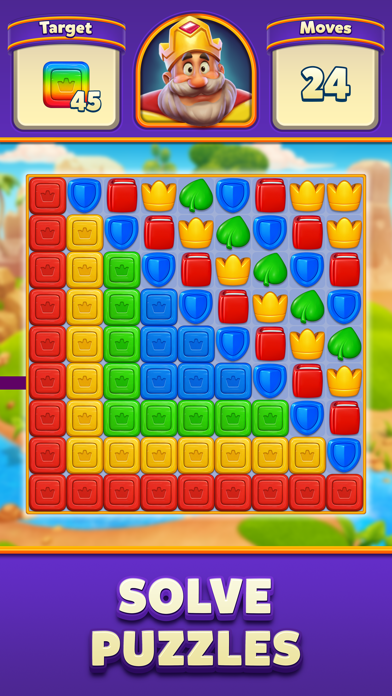
Keep the target panel visible alongside the board. After an important action, check both the remaining targets and the moves left. If a planned shape has changed during a cascade, choose from the new layout rather than trying to force the old pattern. Precise selection also protects valuable setups: an accidental ordinary match can spend the piece you needed for a Light Ball or remove a nearby support for a combination. Accuracy is especially helpful when several similar colours sit around the same special piece.
Key Features of Royal Match
Royal Match combines target-based match-three puzzles with four familiar power-up types and castle tasks. Rocket, Propeller, TNT and Light Ball effects reward different matching shapes, while combinations can extend their reach. Recognising those shapes makes board reading more useful than simply finding the first group of three.
The castle layer gives completed puzzles a longer purpose. Stars contribute to tasks involving King Robert's surroundings, and the character setting provides continuity between boards. Inside the level, however, moves and targets still decide success. Keep those scales separate in your planning: earn progress by solving the immediate puzzle, then use the task panel to see what that progress builds. A new board can require a different opening even when the visual theme is familiar. The combination of simple input, changing layouts and purposeful special pieces gives the game room for both quick sessions and more careful puzzle decisions.
Pro Tips: Look for a Continuous Solution
Build a useful sequence rather than collecting unrelated clears. One move might open a constrained section, the next create a power-up and the third send its effect through the remaining target. You do not need to predict every replacement piece to connect these decisions. A short plan based on visible access is enough.
For example, notice when a lower match will shift a promising four-piece pattern above it. If that shift destroys the pattern without improving the target, consider forming the power-up first instead. On another board, opening the lower space may be exactly what exposes the target. Compare the consequences rather than applying a fixed rule that lower matches are always better. After a cascade, preserve the purpose of the plan while changing the exact move to fit the new pieces.
Compare Moves by Their Consequences
Compare candidate swaps using three questions: what target progress happens now, what space opens and what special piece might become available next? A large match with no connection to the objective can be weaker than a small match that removes the final obstruction from a useful line.
Imagine a Rocket near an awkward target and a separate easy match in an open corner. Moving the Rocket into a useful position or combining it with another power-up can change the important part of the board. Clearing the open corner may only replace pieces. On the other hand, if that ordinary match completes the remaining collection immediately, take the finish. Good Royal Match decisions are contextual. Evaluate the result the current board needs, then choose the simplest available action that provides it. Avoid spending multiple moves on preparation when a direct solution already exists.
Boosters, Planning and Retries
Boosters and power-ups should answer a specific problem rather than replace inspection of the target. Before using an optional tool, check whether an ordinary match or an existing special piece can already reach the remaining requirement. Read the tool's current effect and resource prompt before confirming it.
After a failed attempt, identify where moves stopped contributing to the difficult part of the board. Perhaps a useful Rocket was activated too early, a promising Light Ball pattern was spent on a basic match or an easy area received repeated attention while the final target remained closed. Keep the successful part of the opening and change that first unhelpful decision. A retry with a defined adjustment teaches more than repeating the same swaps faster. When the board rearranges differently, retain the purpose of the adjustment rather than trying to copy an old sequence exactly.
Read the Targets First
In Dream Games' original Royal Match, the target panel and move counter define the puzzle. The official basic-play instructions explain completing targets with matches or power-ups before the allotted moves run out. Read those targets before deciding whether an attractive match is useful.
Suppose a board's remaining task is concentrated near a corner. A central clear may rearrange many pieces, but a smaller match beside that corner might directly advance the target. Alternatively, a central pattern could create a power-up that reaches the awkward area. Compare those purposes, not just their immediate animations. The move budget makes preparation worthwhile when it buys useful access or several target hits, but not when it is an elaborate detour from an available finish.
Power-Up Patterns
The official game uses Rocket, Propeller, TNT and Light Ball power-ups. Dream Games' power-up creation instructions describe four in a line for Rocket, four in a square for Propeller, five in an L or T for TNT and five in a line for Light Ball.
Learn the shapes as possibilities on the board, not only as names in a menu. Before spending a piece on a three-match, check whether it can complete one of those larger arrangements. Then ask which effect the remaining targets need: a line clear, a local blast, a flying clear or removal of a colour. The best special piece is the one whose role and position help the current puzzle, rather than whichever is easiest to create without considering the target panel.
Advanced Tips: Plan Useful Combinations
Power-up combinations can extend a useful effect across more of the board. The official Royal Match combination reference explains, for example, that Rocket plus TNT clears three rows and three columns, while Light Ball combined with another power-up changes a colour's pieces into that power-up type.
Position matters before activation. If a combination is almost available, inspect whether one ordinary swap can bring the pieces together without spending too much of the move budget. Compare that setup with using each tool separately. Near the finish, a direct clear of the remaining target can be better than chasing a dramatic combination. Earlier in a crowded board, a well-placed combination can create access that several ordinary swaps would struggle to achieve.
Stars, Coins and Castle Tasks
Stars, coins and castle tasks belong to Royal Match's progression layer. Dream Games' task explanation connects stars earned from completed levels with work on castle areas. Coins have different uses and should not be treated as the same resource.
Keep the current board decision separate from the reward screen that follows it. A castle task may be the reason you want to complete another level, but it does not make an irrelevant match better. After winning, inspect the task requirement and choose what to complete. When returning later, the task panel can remind you of your wider progress, while the next puzzle's targets tell you what needs attention right now.
King Robert, Winston and Duke
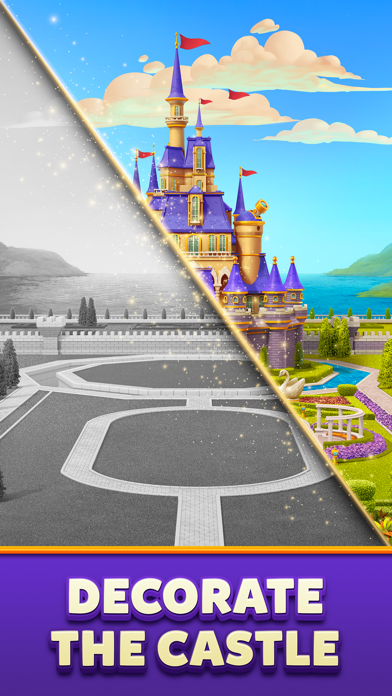
King Robert, Winston the butler and Duke the dog give Royal Match its castle setting and recurring cast. Puzzle wins support the surrounding tasks, so the world provides continuity between otherwise distinct boards. A new area is part of that longer progression, while each level still needs its own target-based plan.
Use the castle as a reason to return, then let the board decide how you play. When a level proves difficult, a practical next goal is more useful than rushing towards the next task: create one well-positioned Rocket, preserve a Light Ball opportunity or remove the obstruction that repeatedly remains at the end. Those small improvements make the next win more understandable. After completing the level, the task panel gives that effort a visible place in King Robert's surroundings. The character setting and matching decisions work together without requiring every puzzle to use the same opening.
Modes, Events and Focused Sessions
Royal Match events can add goals and rewards alongside ordinary level play. Read the current activity panel for its requirements and availability rather than planning around a promotional clip or an old schedule. A reward is useful context, but it does not change the board's remaining target or make an irrelevant swap a better move.
For a short session, choose a concrete aim such as understanding one difficult layout or recognising a useful power-up shape more quickly. If an event offers another objective, check how it relates to the level you are about to play. Keep the target and move counter in view when the matching begins. Long-term progress comes from completing boards, so preserve the same careful habits whether you are playing for a castle task, an activity reward or simply the satisfaction of solving a puzzle. Check the current product information for installation and connectivity details.
Similar Games
The similar royal matching games provide more browser puzzles with their own targets and combinations. Kings and Queens Match and Royal Garden Match keep a royal atmosphere, while Candy Swipe and Garden Tales offer another visual setting for matching decisions.
Choose by the rule you want to practise. If you enjoy creating larger special pieces, inspect a game's match patterns and combo system. If you prefer planning a strong finish, look for goal-based boards that reward creating and positioning useful special pieces. Royal Kingdom is Dream Games' separate title associated with King Richard and kingdom districts. These comparisons help you choose a fresh matching challenge by the decisions it offers rather than by its background artwork alone.
Browser games in this collection
- Kings and Queens Match 3 — Royal jewels, crowns and other pieces form a goal-based match-three board. The third Kings and Queens Match game combines limited-move objectives with bombs, hammers and other board-clearing tools.
- Kings and Queens Match 2 — Princess Bella returns in a second royal-themed matching adventure. Jewels and crowns provide the pieces, while individual level targets and a move allowance create the puzzle.
- Kings and Queens Match — The first Kings and Queens Match follows Princess Bella through a royal match-three journey. Players combine jewels and crowns, work towards level goals and use tools such as royal bombs or hammers.
- Royal Garden Match 2 — Royal Garden Match 2 combines flower, fruit and plant matching with a garden-restoration theme. Its source describes dragging adjacent pieces to make valid matches, collecting the requested icons and creating stronger pieces from larger combinations.
- Magic & Wizards Match 2 — A gem-matching puzzle with a magical theme, blockers and optional boosters. It is a separate game, with no Royal Match or Candy Crush account connection.
- Candy Swipe — A sweet-themed matching game using drawn groups of at least three items. It is a browser alternative by its catalogue publisher, not Candy Crush.
History, Updates and Walkthroughs
Royal Match is a Dream Games product with official product and help pages covering its matching rules and progression. Event schedules and individual puzzle layouts can change, so enduring tactics are more useful than a fixed level total or a temporary reward presented as permanent.
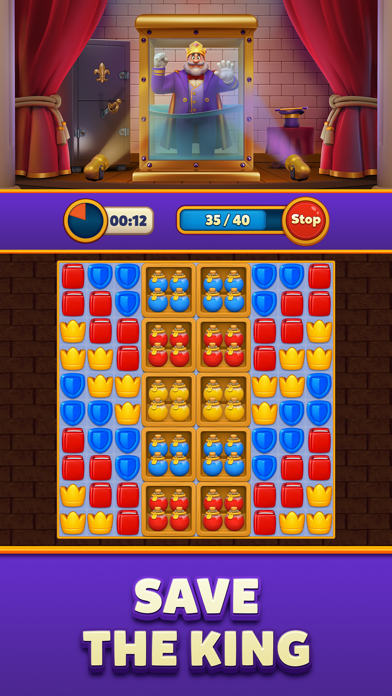
When watching a level walkthrough, pause before a key swap and explain its purpose. Is it reaching an awkward target, forming a power-up or bringing two special pieces together? If your board develops differently, keep that purpose rather than copying an input whose pieces have moved. The trailer and screenshot gallery below provide additional context for the game's castle setting and colourful boards. Watch the effects of Rocket, Propeller, TNT and Light Ball combinations, then compare how a similar effect could help the specific target in your own level.
Choose the Next Useful Move
Begin Royal Match by reading the target panel and choosing a match whose effect you can explain. Look for a useful power-up shape before spending one of its pieces in an ordinary clear. Compare a combination setup with any direct finish already available. The right choice is the one that makes the current objective easier to complete within the remaining moves.
After the board settles, inspect the area that changed and decide whether your short plan still applies. If the last target has become accessible, act on that opportunity instead of pursuing an unnecessary large combination. If it remains closed, identify which obstruction or narrow section needs attention next. A clear purpose makes each attempt more satisfying and gives a failed level something useful to teach. Keep improving that connection between swap and result, then let the earned stars carry your progress into King Robert's castle tasks.
Frequently asked questions
What is Royal Match?
Royal Match is Dream Games’ match-three puzzle game featuring King Robert. Complete level targets within a move allowance, create power-ups and earn stars for castle tasks.
How do I make a move in Royal Match?
Swap neighbouring pieces to form an eligible match. Compare immediate target progress with useful larger patterns, then let the board settle before choosing the next move.
How do you create Royal Match power-ups?
Four in a line makes Rocket, four in a square makes Propeller, an L or T of five makes TNT and a line of five makes Light Ball.
What are stars used for in Royal Match?
Stars earned from completed levels are used for castle tasks. The task panel shows which work is available and how it contributes to the surrounding areas.
Who are King Robert’s companions?
Dream Games identifies Winston the butler and Duke the dog alongside King Robert in Royal Match’s castle setting.
How do I choose a useful Royal Match combination?
Check the effect and position of both power-ups against the remaining target. A correctly placed combination can open an awkward section; near the finish, a direct clear may be enough without extra setup.
Why can a large Royal Match clear fail to finish a level?
It may remove pieces outside the remaining target area. Check the exact objective and choose a move whose effect reaches it, opens access or prepares the necessary power-up.
How should I use a Royal Match walkthrough?
Compare the starting board and objective, then explain the purpose of important swaps. If your pieces develop differently, keep the purpose of the move rather than copying an input whose setup has disappeared.

Good game? Tell us.0
Share a tip, celebrate a high score, or tell us what you think. Keep it friendly.